
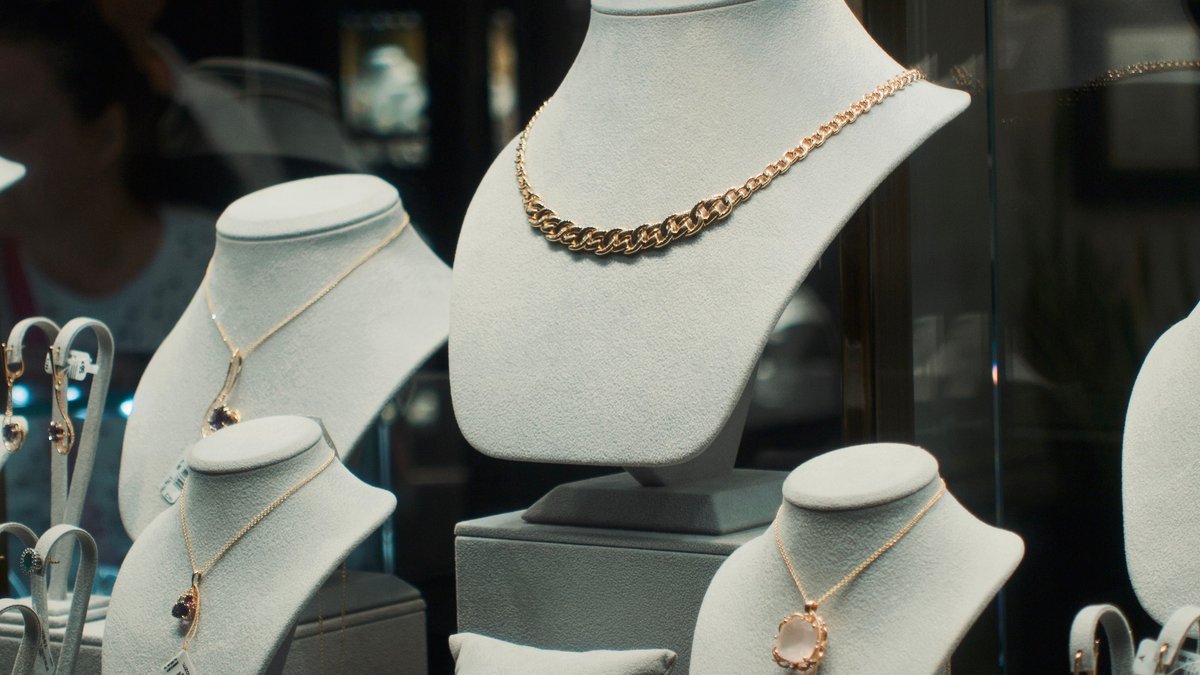
Miami The Jeweler’s production team works under a rule that leaves no space for a pile of pieces that came close. If a finished piece does not meet the shop’s top standard, the team melts it down and starts over. Founder Samuel Madrid frames the rule around the person who will wear the piece: “Everything we do has to be perfect, otherwise it’s not ready for our customers.”
The rule reaches well past the workbench. It shapes how the downtown Miami shop picks its stones, what it inspects on a finished chain and whom it hires.
What starting over costs
Melting a piece throws away the labor already spent on it: design time, setting, polishing, plating. On a stone-heavy chain or an iced pendant, that labor adds up fast. A shop could recover some of that cost by selling the flawed piece at a markdown. Miami The Jeweler takes the loss instead.
Madrid applies the same logic to his stone standard. The shop uses VVS1, D-color moissanite exclusively in its moissanite line and makes no exception on that standard, whatever it does to profit. The melt rule extends that thinking from the stone to the finished piece.
What the top standard covers
A promise of quality means little until someone spells it out, and Miami The Jeweler does. For a moissanite piece, the standard starts with VVS1, D-color stones set in 925 sterling silver and continues through the work that surrounds them:
- Stone consistency: matching color and size from the first stone to the last, which the shop treats as critical on chains carrying hundreds of stones.
- Setting precision: small, clean prongs that hold each stone securely without letting metal crowd it.
- Alignment and spacing: rows that run straight and gaps that stay even down the full length of the piece.
- Setting height: stones that sit level with their neighbors.
- Proportion and weight: substantial construction that suits the design.
- Finishing and plating: a clean surface, including the 18K gold plating on yellow-finish sterling silver pieces.
- Clasps and components: hardware that closes securely and works as intended.
Diamond pieces, natural or lab-grown and set in solid 10K, 14K or 18K gold, go through the same list. The materials change. The rule does not.
Why consistency drives the rule
A solitaire ring puts one stone on display. A tennis chain lines up hundreds, and any flaw repeats. One stone that reads a shade warmer than its neighbors, one prong thicker than the rest, one row that drifts off line: your eye catches the break in the pattern before you can name it.
Through its own production experience, Miami The Jeweler has found that using D-color moissanite on every stone gives its iced pieces the crisp, colorless uniformity it wants. Choosing the right stones solves one part of the problem. The melt rule covers the rest, catching the setting, spacing and finishing errors that good stones cannot fix on their own.
The shop puts the principle this way: the quality of a piece is about more than the stone. A buyer can own an excellent gemstone set in a mediocre piece of jewelry, and the melt rule exists to keep that from happening at Miami The Jeweler.
The people who hold the line
A rule this strict depends on a team that believes in it. Madrid calls building that team the hardest part of running the business: finding like-minded people determined to reach excellence, and above all finding production experts. “When you know exactly what to look for, it’ll be a game changer,” he says.
Knowing what to look for is the whole mechanism of the melt rule. A production expert who can spot a prong out of proportion or a stone sitting a fraction high catches the problem before the piece reaches a display case. A team without that eye would pass the same piece along. Madrid’s ten years of studying jewelry before he opened the shop gave him that eye, and his challenge since has been finding others who share it.
For the customer, the rule stays invisible. You see the version that passed. The versions that failed went back into the melting pot.
Miami The Jeweler shows its finished work at its showroom at 22 NE First St, Suite 225, Miami, and through its online collections.