
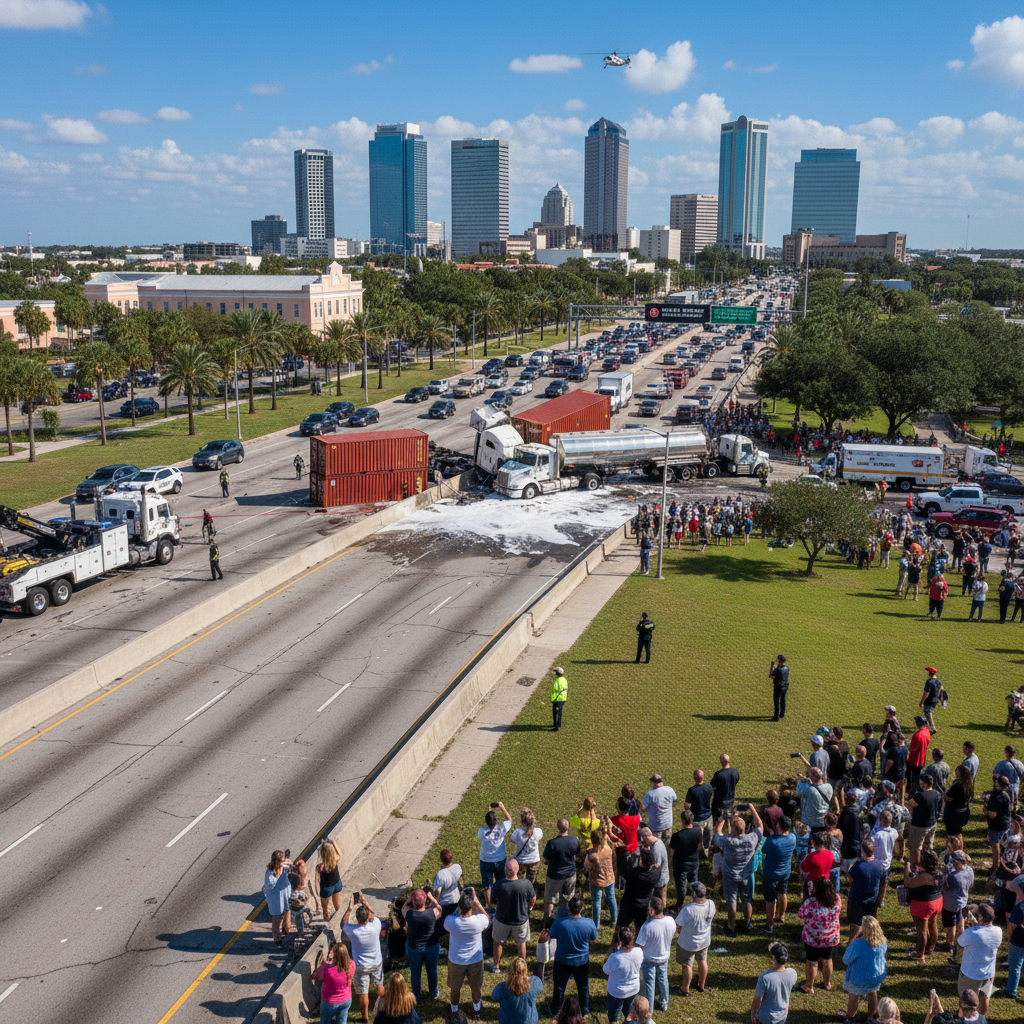
On I-4 and I-275 in Tampa, hotspots for truck accidents include areas near downtown Tampa, Westshore, interchanges with local roads, and congestion zones during peak hours.
Factors such as heavy traffic, intricate weaving, weather conditions, poor visibility, and unstable road surfaces contribute to these risks. Maintaining vigilance, adjusting speed, and following safety protocols are vital to stay safe.
For those who find themselves involved in an accident, the Law Offices of Anidjar and Levine can provide the legal support you need. Continuing with this guide will provide you with detailed strategies to traverse these dangerous zones effectively.
For more assistance, consider reaching out to a Tampa Truck Accident Lawyer.
Key Takeaways
- Major hotspots include I-4 near Downtown Tampa and I-275 Northbound around Westshore, with congestion and complex traffic patterns increasing accident risks.
- Adverse weather like rain, fog, and storms significantly raise crash likelihood on both interstates, requiring cautious driving and lower speeds.
- Interchanges with local roads and hotspots near bridges experience high collision rates due to poor visibility, signage, and wildlife crossings.
- Heavy traffic during peak hours, construction, and lane closures worsen congestion, making vigilant driving and safe following distances essential.
- Maintaining alertness, avoiding aggressive maneuvers, and adjusting for weather conditions are key to staying safe on Tampa’s high-risk interstates.
Major Truck Accident Spot on I-4 Near Downtown Tampa
Despite the city’s efforts to improve traffic safety, the stretch of I-4 near downtown Tampa remains a frequent site for major truck accidents. This area’s intricate traffic patterns and high vehicle volume pose ongoing challenges, especially during adverse weather conditions. Reduced visibility and slick surfaces from rain or storms substantially elevate the risk of accidents involving large trucks. These incidents threaten not only the drivers involved but also pedestrians crossing nearby, emphasizing the importance of pedestrian safety measures. When weather impacts road conditions, truck drivers must exercise caution, reducing speed and increasing vigilance to prevent collisions. As a community, supporting initiatives that enhance warning systems and roadway maintenance can mitigate these hazards. Ensuring that truck operators and pedestrians alike are aware of weather-related risks is essential for everyone’s safety. Prioritizing these measures demonstrates a shared commitment to reducing accidents and safeguarding lives along this essential corridor.
Congestion and Risks on I-275 Northbound Around Westshore
The northbound lanes of I-275 near Westshore have become increasingly congested, creating significant hazards for truck drivers and other motorists alike. This congestion often leads to complex weaving patterns, where vehicles must frequently change lanes to reach their destinations, heightening the risk of collisions. Weather impacts further compound these dangers; rain, wind, and sun glare can impair visibility and traction, making swift lane changes even more perilous. These conditions demand heightened vigilance and careful driving to prevent accidents. As you steer through this area, prioritize safe following distances, avoid abrupt lane switches, and stay alert to surrounding traffic behaviors. Recognizing the influence of congestion and weather impacts on driving safety presents an opportunity to serve by maintaining caution, protecting lives, and reducing the likelihood of severe incidents for all road users. Your proactive approach can help mitigate risk in this hazardous zone.
Unstable Road Conditions Contributing to Accidents on I-4 West
Unstable road conditions on I-4 West substantially increase the risk of accidents, particularly during periods of adverse weather or ongoing construction. Pothole management becomes vital to maintaining roadway safety, as poorly managed potholes can cause tire blowouts, loss of vehicle control, and delayed reactions from drivers. Weather impacts, such as heavy rain, fog, or intense sunlight, further deteriorate road conditions, making surfaces slick or obscured and reducing visibility. These factors demand heightened driver awareness and caution. Proper maintenance and prompt pothole repairs help mitigate hazards, but unpredictable weather can still exacerbate existing issues. By understanding how unstable conditions contribute to accidents, you’re better equipped to serve others by encouraging safe driving practices. Staying alert, reducing speed during weather disturbances, and reporting hazardous conditions are indispensable steps. Proactive management and vigilance help prevent accidents, ensuring the safety of all road users on I-4 West.
Bottleneck Areas and Heavy Traffic During Rush Hours on I-275
During rush hours, bottleneck areas on I-275 experience significant congestion that can severely impact travel times and safety. Construction projects and lane closures further exacerbate these delays, creating unpredictable traffic flow patterns. Understanding how peak rush hour delays and ongoing infrastructure work contribute to these traffic hotspots is vital for effective risk management.
Peak Rush Hour Delays
Peak rush hour periods on I-275 in Tampa are characterized by significant congestion, particularly in specific bottleneck areas that consistently experience heavy traffic volumes. During these times, delays can increase substantially, often exacerbated by weather impacts or incidents such as bridge collapses. These disruptions not only slow traffic flow but also pose safety risks for drivers and emergency responders. Recognizing essential hotspots enables you to plan routes carefully and anticipate delays, especially in congested zones like the interchange near the bridges or sections prone to bottlenecks.
| Bottleneck Area | Common Causes | Safety Considerations |
|---|---|---|
| Downtown Segment | Heavy commuter volume | Increased risk of accidents, especially in bad weather |
| Bridge Sections | Bridge collapses or repairs | Slower response times, potential hazards |
| Interchanges | Merging traffic, bottlenecks | Maintain safe distances and stay alert |
Construction and Lane Closures
Construction activities and lane closures on I-275 in Tampa considerably contribute to bottleneck areas, especially during rush hours when traffic volumes peak. These closures often create sudden reductions in lane availability, leading to congestion and longer travel times. Proper traffic signage is vital to inform drivers of upcoming changes, allowing for safer transitions and smoother flow. Additionally, lane closures can impede emergency response efforts, making timely access crucial during accidents or other incidents. It’s important for drivers to stay alert and follow posted signage, reducing sudden lane changes that could exacerbate congestion or compromise safety. Clear communication and strategic planning by construction authorities help minimize delays, emphasizing the significance of awareness and cooperation from all road users to enhance safety and traffic management during active construction periods.
Notorious Accident Hotspots at I-4 Interchanges With Local Roads
Several I-4 interchanges with local roads have developed reputations as high-collision zones, often due to poor visibility and intricate traffic patterns. These areas frequently experience congestion, which exacerbates the risk of accidents, especially during peak hours. Understanding these hotspots’ specific challenges is vital for improving safety and reducing crashes in the region.
High-Collision Interchange Areas
Interchanges between I-4 and local roads in Tampa have become notorious for high collision rates, posing significant safety concerns for both drivers and authorities. These high-collision areas often involve intricate traffic patterns, sudden merging, and unpredictable weather hazards, which impede safe navigation. Additionally, wildlife crossings can unexpectedly appear near these zones, increasing the risk of accidents. To mitigate these dangers, drivers need to remain vigilant, especially during adverse weather or low visibility conditions. Implementation of targeted safety measures, like enhanced signage, improved lighting, and wildlife crossings, can effectively reduce crashes. Recognizing these hazardous zones and understanding the contributing factors is crucial for protecting yourself and others on the road.
| Cause | Impact | Safety Measure |
|---|---|---|
| Weather hazards | Reduced visibility, skidding | Drive slower during storms |
| Wildlife crossings | Sudden animal crossings | Use alert signals |
| Complex interchanges | Confusing traffic flow | Clear signage and lighting |
| Merging conflicts | Increased rear-end collisions | Proper lane discipline |
Poor Visibility Zones
Poor visibility zones at I-4 interchanges with local roads represent some of the most dangerous accident hotspots in Tampa. These areas are vulnerable to weather hazards such as fog, rain, and nighttime darkness, which considerably diminish driver perception and response time. Reduced visibility increases the risk of collisions, especially between large trucks and passenger vehicles. To protect yourself and others, remember to:
- Lower your speed during adverse weather conditions to allow more reaction time
- Use headlights appropriately to enhance your visibility and ensure others see you
- Be vigilant at poorly lit interchanges, especially during dusk and night hours
Congestion and Traffic Flow
Traffic congestion at the I-4 interchanges with local roads considerably contributes to the high incidence of accidents in Tampa, particularly during peak travel times. Emerging traffic patterns, influenced by increased vehicle volume and intricate roadway designs, often lead to unpredictable flow, heightening crash risks. Implementing adaptive traffic management systems can notably improve safety by providing real-time data to optimize signal timing and traffic flow, reducing congestion’s unpredictability. These systems help accommodate fluctuating traffic volumes, preventing bottlenecks and decreasing the likelihood of accidents caused by sudden stops or erratic driving behaviors. As a driver seeking to serve others through safe practices, staying alert to changing traffic conditions and obeying updated signals enhances safety for everyone on the road. Effective traffic management ultimately benefits the entire community by reducing accident hotspots at these vital interchanges.
Safety Tips for Navigating High-Risk Zones on Tampa’s Interstates
Navigating high-risk zones on Tampa’s interstates requires heightened awareness and proactive safety measures, especially given the intricacy and congestion often present in these areas. To protect yourself and others, remain alert to changing conditions and avoid distractions. Recognize the signs of driver fatigue, which can diminish reaction time, and always plan for adequate rest before long trips through these zones. Weather hazards, such as rain, fog, or storms, can substantially impair visibility and road traction, making cautious driving essential.
Consider these safety tips:
- Maintain a safe following distance to give yourself ample time to react.
- Adjust your speed appropriately during adverse weather conditions and stay alert for sudden changes.
- Use your mirrors and signals consistently, and avoid aggressive maneuvers in congested or intricate areas.
Prioritizing these practices helps create a safer environment for everyone and reduces the risk of accidents in Tampa’s high-risk interstate zones.
Conclusion
Understanding the crucial accident hotspots on Tampa’s I-4 and I-275 is vital for your safety. By remaining vigilant in high-risk areas, especially during peak hours and near intricate interchanges, you can greatly decrease your risk of collision. Adhering to established safety practices and staying aware of traffic conditions empowers you to steer these highways responsibly. For those involved in accidents, the Law Offices of Anidjar and Levine can provide essential guidance. Prioritize caution and stay informed to minimize hazards and ensure a safer driving experience on Tampa’s busy interstates. If you need legal assistance, consider reaching out to a Tampa Truck Accident Lawyer.